
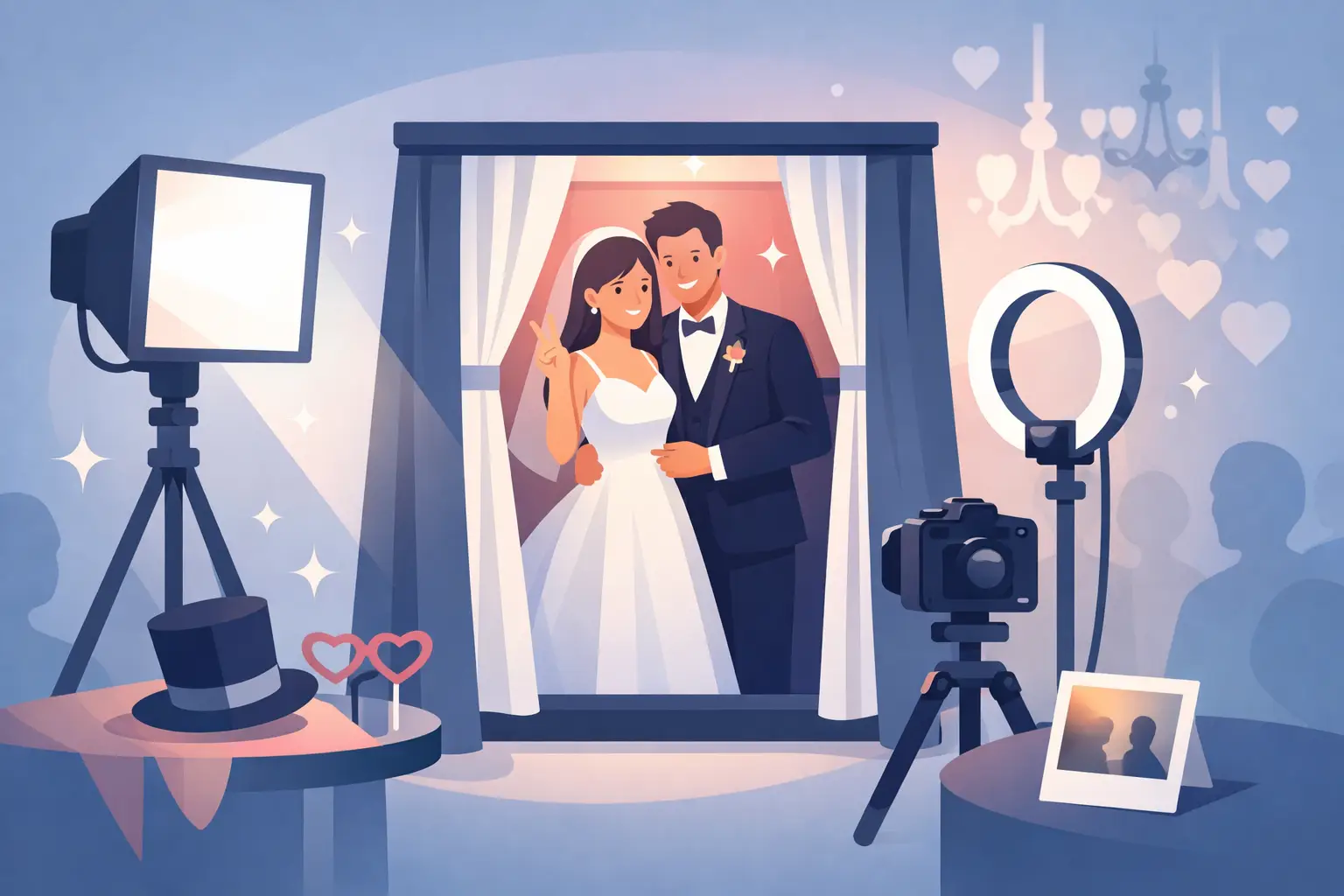
A packed dance floor can hide a lot. A photo booth can’t. The second your guests step in front of the camera, photo booth lighting quality for weddings becomes the difference between glowy, frame-worthy images and flat, shadowy photos that never make it onto the fridge.
That matters more than most couples expect. You can have a beautiful venue, a great backdrop, and guests who are fully ready to pose, but if the lighting is off, the final result feels cheap fast. For a wedding, where every visual detail is part of the experience, lighting is not a small technical extra. It is the reason skin looks smooth, outfits look true to colour, and printouts feel polished instead of disposable.
Why photo booth lighting quality for weddings changes everything
Wedding photo booths sit in tricky environments. Reception spaces are often romantic, dim, and designed for mood, not photography. Candles, uplighting, coloured LEDs, and dark corners can look incredible in person while creating a challenge for any camera setup. A booth that relies on whatever light happens to be in the room is already starting from a weak position.
Good booth lighting creates consistency. It gives every guest the same flattering look, whether they step in at cocktail hour or near the end of the night. That consistency is a big part of what makes a premium booth feel premium. Guests notice when the first group’s photos look crisp and the tenth group’s photos look just as good.
There is also a practical side. Weddings move quickly. People jump in for one photo, then pull in six more friends, then someone adds grandma, then the flower girl runs through the frame. Lighting has to be ready for all of it without slowing the fun down. If a booth needs constant adjustment or struggles with different skin tones, outfit colours, or group sizes, the experience starts to feel clunky.
What good lighting actually looks like in a wedding booth
Most couples are not comparing light modifiers or asking about output levels, and they should not have to. What you do want to look for is the result.
Great lighting in a wedding booth is flattering first. It softens shadows instead of carving harsh lines under the eyes or nose. It makes skin look bright and healthy, not shiny or washed out. It also keeps detail in dresses, suits, sequins, and florals, which matters when guests have made a real effort with their look.
Colour accuracy is another giveaway. If white outfits look yellow, navy suits turn black, or blush tones disappear, the lighting setup is not doing enough. At weddings, colour is part of the design story. Your booth photos should feel connected to the rest of the day, not like they came from a completely different event.
Then there’s catchlight, the little sparkle in the eyes that makes portraits feel alive. It sounds subtle, but it has a big impact. Good lighting gives photos energy. Bad lighting makes even happy guests look tired.
Soft light beats harsh light almost every time
For weddings, soft and even light tends to win. It is more forgiving across different ages, skin tones, and face shapes, and it works better for groups. Harsh light can create drama, but a photo booth is not a fashion editorial set. It needs to make everyone look good quickly and reliably.
That is especially true when guests are taking keepsake prints home. A flattering print gets saved. An unflattering one gets left on the table.
The biggest lighting mistakes couples should watch for
One of the most common mistakes is assuming all booths use similar photo quality. They do not. Some setups prioritize convenience over image quality, and that usually shows up in the lighting first.
A booth with weak front lighting may produce grainy photos, especially in darker venues. A booth with overly direct light can make skin look shiny and create hard shadows behind guests. Some booths also struggle when a reception has coloured ambient lighting. If the booth is not properly lit and balanced, pink or blue room light can take over the image.
Another issue is poor coverage for groups. A booth may look fine with two people standing still, then fall apart when six guests squeeze in. People at the edges end up darker than the centre, and taller or shorter guests can catch uneven light. For weddings, where group energy is half the fun, lighting has to work beyond the ideal test shot.
Ring light photos are not always enough
A lot of people associate photo booths with ring lights, and ring lights can absolutely help. But on their own, they are not a guarantee of premium results. They can create a clean, social-ready look, but depending on the booth design and camera quality, they can also produce a flatter image than couples expect.
It depends on the setup. For a casual event, a simple ring light may be perfectly fine. For a wedding where you want polished prints and a luxury feel, stronger photography-first lighting usually delivers a better result.
How lighting affects different booth styles
Not every booth uses light the same way, which is why the right booth for one wedding may not be the right fit for another.
A Magic Mirror setup needs lighting that flatters guests standing at a slightly different angle than a traditional enclosed or face-forward booth. A 360 video booth has its own challenge because movement changes everything. The lighting has to stay flattering as guests turn, dance, and interact from multiple sides. A DSLR photo booth is often where lighting quality becomes most obvious, because a stronger camera will reveal both the strengths and weaknesses of the setup.
This is where a consultation actually helps. It is not just about choosing the booth that looks coolest online. It is about matching the booth, lighting approach, and output style to your venue, guest count, and overall wedding aesthetic.
Questions worth asking before you book
If you are comparing vendors, ask to see real wedding galleries, not just a few hero images. Look for consistency across different venues and lighting conditions. If every sample appears to be taken in one bright showroom, that does not tell you much about reception performance.
Ask whether the booth uses professional camera-based capture or a more basic setup. You can also ask how the team handles dim ballrooms, coloured uplighting, and larger group shots. These questions are not about getting overly technical. They are about finding out whether the company thinks like photographers or simply delivers equipment.
A premium provider should be able to speak clearly about image quality in plain language. They should also care about how the booth photographs your guests, not only how the booth itself looks in the room.
Why lighting quality is part of the guest experience
Guests may not say, “The light quality was excellent tonight,” but they absolutely feel the difference. When photos come out bright, flattering, and instant-share ready, people stay longer, laugh more, and come back for another round. The booth becomes a real part of the celebration instead of a quick novelty.
That is especially true at weddings where multiple generations are stepping in. Good lighting helps everyone feel confident, from your friends doing playful group shots to family members who might not usually love being photographed. When people like how they look, they engage more.
For couples who care about design, lighting also protects the overall look of the wedding. It keeps the booth images aligned with the rest of the day – elevated, intentional, and worth saving. That’s a big reason premium teams put so much focus on capture quality. At Pic Booth, that photography-first approach is part of what turns a fun booth moment into something guests actually want to print, text, and post.
Photo booth lighting quality for weddings is really about trust
By the time your reception starts, you should not be wondering whether the booth will work in a dim venue or whether your guests will look washed out in their photos. You should be able to trust that the setup has been designed to handle real wedding conditions, not ideal ones.
That trust is worth paying for because the booth does more than entertain. It creates keepsakes. It captures outfits, friendships, family moments, and those late-night group photos that somehow become everyone’s favourites. If the lighting misses, those memories still happen, but they do not get preserved the way they should.
When you are choosing a wedding photo booth, look past the shell, the props, and even the template design for a minute. Ask what the photos actually look like. The magic is not just in having a booth there. It is in giving your guests images that feel as special as the night itself.