
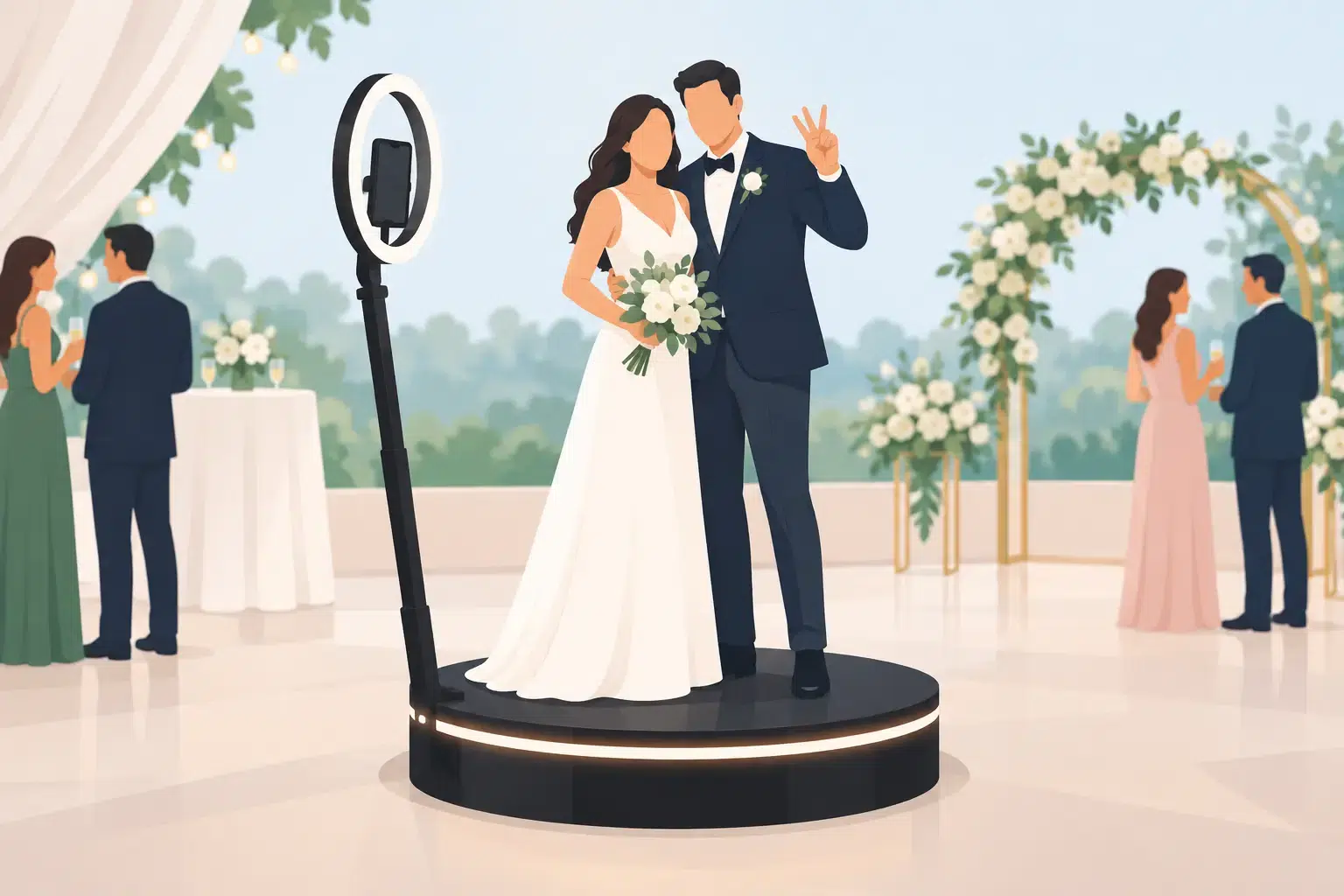
A packed dance floor, a full cocktail hour, and a guest list that keeps growing are all exciting – until you start wondering whether everyone will actually get a turn on the 360 platform. 360 booth capacity is not just about the number of guests invited. It is about how many people can step on, create a video they love, and move along without turning a must-have experience into a long line.
For weddings, galas, brand activations, and milestone celebrations, the best 360 setup feels effortless. Guests see the booth, gather their friends, capture a high-energy moment, and receive a polished video worth sharing. That magic comes from matching the booth experience to your crowd, timeline, venue layout, and the way you want your event to feel.
What 360 Booth Capacity Really Means
There are two different capacity questions to ask. The first is how many guests can safely fit on the platform at one time. The second, and usually more useful, is how many guests can enjoy the booth over the course of your rental.
Most 360 videos look their best with one to four people on the platform. A couple can create a romantic slow-motion moment, while a small group can bring the energy with dancing, cheering, or a perfectly timed champagne toast. Larger groups may be possible with the right platform and setup, but crowding too many people into the shot can hide faces, limit movement, and make the final video feel less cinematic.
Throughput depends on more than the spin itself. Guests need a moment to choose props, step into position, understand the prompt, record the clip, step off safely, and make room for the next group. A smooth experience commonly allows for roughly 30 to 60 group videos per hour. Depending on whether guests arrive in pairs, trios, or larger friend groups, that can mean approximately 80 to 200 guests participating in an hour.
That is a useful range, not a promise. A formal corporate crowd may take more direction and move at a steadier pace. A lively wedding party can fill the platform with four friends at a time and fly through sessions. The goal is not to race guests through. It is to give them enough time to create something they are excited to text, post, and replay.
How to Plan 360 Booth Capacity Around Your Guest Count
Start with the number of people who will realistically participate, not only the number printed on your invitation list. At a 150-person wedding, perhaps 100 guests will use the 360 booth. At another wedding of the same size, nearly everyone may want a turn because the booth is placed beside the dance floor and the newlyweds make it part of the celebration.
A simple planning approach is to estimate participation, then match it to your active booth time. For an intimate event of 50 to 75 guests, two to three active hours is often generous. For 100 to 150 guests, three hours is a comfortable starting point when the booth is open during cocktail hour and dancing. For 175 guests or more, consider a longer booking window, especially if you expect individual or couple videos rather than group clips.
The timeline matters just as much as the total number of hours. Opening the 360 booth while guests are seated for dinner may technically add time, but it does not always add participation. The strongest windows are typically cocktail hour, the transition after dinner, and peak dancing. If you want every guest to have a chance, keep the booth available through at least one high-energy portion of the reception.
For a corporate event, capacity planning should also account for the program. If 300 guests have a single 90-minute reception before awards begin, the booth will experience a sharp rush. If those same guests attend an open-house-style activation over four hours, the flow will be much easier to manage. The guest count has not changed. The available participation time has.
A realistic example for a 150-guest wedding
Imagine a 150-person Niagara wedding with a three-hour 360 booth rental. If 110 guests participate and they average three people per video, the booth only needs to capture about 37 group sessions. That is very achievable with thoughtful timing, a clear queue, and an attendant keeping the energy moving.
Now imagine those 110 guests mostly want couples videos or individual glam shots. The booth may need to capture 70 to 100 sessions instead. It can still work, but this is when an extra hour, a more focused open period, or encouragement for group videos makes a genuine difference.
Guest Flow Is the Secret to a Great 360 Experience
A 360 booth can have plenty of technical capacity and still feel overwhelmed if the layout is working against it. Place it where guests can see the action and feel invited to join, without blocking entrances, bar service, or the path to the washrooms. The booth should feel like a destination, not an obstacle.
Give the platform enough surrounding space for a natural line, a prop table, and guests waiting for their turn. The people in line become part of the entertainment when they can watch the video being made. That creates excitement without putting pressure on the next group to rush.
An experienced attendant is especially valuable at busier events. They can help guests step on and off safely, suggest a pose or movement, keep groups at an ideal size, and reset the space between clips. Those small moments protect video quality while preventing the line from stalling.
A clear sign or verbal prompt also helps. Guests respond well to simple direction: grab your people, choose one prop, make one big move. It is more effective than leaving everyone to debate poses for five minutes. The result is a livelier video and more turns for the people waiting.
The Trade-Off Between More Guests and Better Videos
When planning capacity, it is tempting to chase the highest possible number of participants. But premium event entertainment is not a turnstile. The 360 booth is there to create extraordinary memories, not hurried footage.
A group of two to four has room to move, react, and show off the details that make an event personal: a wedding dress catching the light, a custom jacket, a bridesmaid squad, a corporate team celebrating a win. A professional-quality video is more likely when guests have enough space and a little guidance.
This is why a larger platform or faster rotation does not automatically solve every capacity concern. The best answer may be a longer operating window, a better location, or an event plan that pairs the 360 booth with another guest experience. A Magic Mirror or DSLR photo booth can welcome guests who want a beautiful printed portrait, while the 360 booth draws the dancers, content creators, and groups looking for movement. For corporate gatherings, a Mosaic Photo Wall or Draw Bots can spread interaction across the room while adding a memorable visual moment.
Ways to Keep Lines Short Without Losing the Magic
For high-guest-count events, a few intentional choices can preserve the fun. Encourage group clips rather than strictly individual turns. Build booth time into the night rather than announcing one short, everyone-at-once opening. Keep prop choices curated instead of overflowing the table. And choose an overlay or event design that is ready to go before guests arrive, so every finished video looks polished without slowing the experience.
It also helps to set expectations with your wedding party, host team, or event planner. They can be the first group on the platform and show guests exactly what to do. Once people see how easy it is, participation becomes more natural and the line moves with a happy, celebratory rhythm.
At Pic Booth, the conversation starts with the event you are creating, not a one-size-fits-all number. A grand ballroom wedding, a backyard celebration, and a high-volume brand event need different timing, layouts, and guest-flow strategies. The right plan lets the booth feel exciting from the first spin to the final song.
Choose a 360 experience that gives your guests room to celebrate, not a reason to watch from the sidelines. With the right booking length and a thoughtful event layout, every spin can become the kind of clip your guests are still sharing long after the last dance.