
You’ve seen the clips: a couple steps onto a platform, their friends hype them up, and suddenly there’s a glossy, slow-motion video where everything looks cinematic. It feels like a little red-carpet moment that somehow happened right in the middle of cocktail hour.
That effect is exactly why 360 booths have become a favourite at weddings and high-energy parties across Niagara and Southern Ontario. But if you’re planning an event, you’re probably asking the practical question behind the magic: how does a 360 photo booth work, and what actually needs to be in place for it to look that good?
How does a 360 photo booth work?
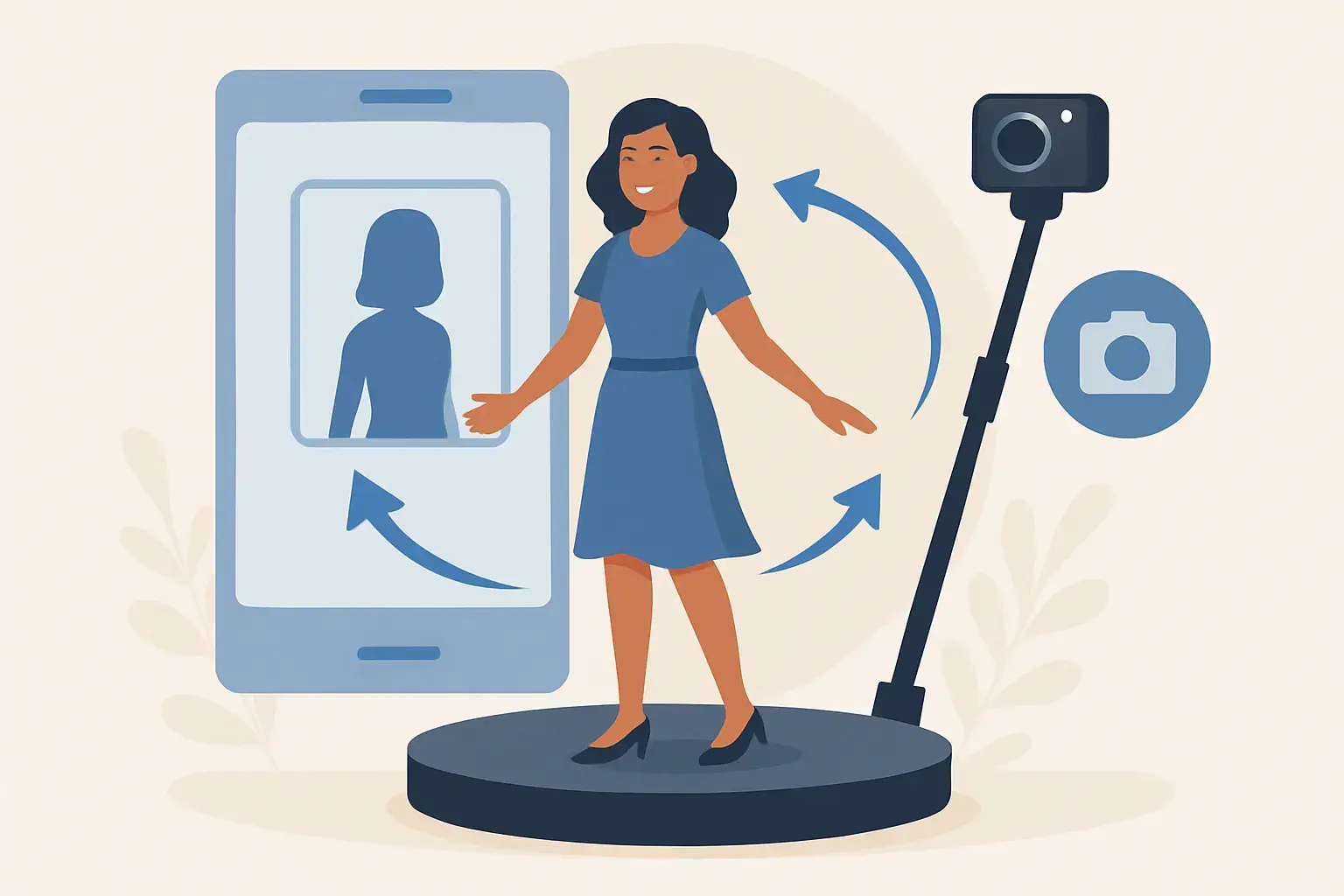
A 360 photo booth is a video experience built around one simple idea: instead of guests posing for a single still shot, they step onto a platform while a camera rotates around them and captures a short, high-frame-rate clip. Software then turns that clip into a polished, shareable “spin” video – often with slow motion, speed ramps, a branded overlay, and music.
The “360” part doesn’t mean the camera takes a full spherical image the way a virtual tour might. It means the camera physically travels around the guests, creating that wraparound, orbiting viewpoint. The result feels dynamic, flattering, and very social-media-forward because the motion makes even simple poses look dramatic.
The core setup: platform, rotating arm, and camera
The heart of the booth is the platform. Guests stand in the centre (sometimes sitting, depending on the event style), and the booth’s rotating arm swings a camera around them in a smooth circle. That arm is motorized and calibrated to keep the movement steady, because wobble is the quickest way to make a video feel “home movie” instead of “wow.”
Most 360 booths use a stabilized camera (often paired with a gimbal) to keep the horizon level as it travels. The camera is usually capturing at a high frame rate so the footage can be slowed down without looking choppy. That’s why the best clips have that crisp, glossy slow-motion feel – it starts with clean capture, not filters.
There are different platform sizes, and this is one of those “it depends” details that matters. A smaller platform can be perfect for two guests and quick turns. Larger platforms fit a group, but they need more floor space, more coordination, and more attention to safety and flow. For weddings, the sweet spot is often a setup that comfortably fits 2-4 people so you get energy without traffic jams.
The secret ingredient: lighting that makes everyone look incredible
If you’ve ever tried filming in a dim reception hall, you know the reality: venues are romantic for the human eye and brutal for cameras.
A premium 360 setup uses lighting designed to flatter faces and keep video quality clean. That usually means an LED ring light or a panel-style light that travels with, or is positioned near, the rotating camera. Good lighting does three things at once: it reduces graininess, sharpens detail, and makes skin tones look smooth and natural.
This is also where a photography-first team makes a difference. Lighting isn’t just “bright enough.” It’s about angle, intensity, and consistency as the camera moves. Done well, your guests look polished from every rotation – even in a moody ballroom.
What the software does after the spin
The spin is only half the experience. What guests really want is the final clip, styled and ready to share.
Right after the camera completes its rotation, the booth’s software processes the footage. Depending on the package and design choices, it can apply:
- Slow motion and speed ramps (that dramatic “dip” in time that makes hair flips and confetti pop)
- Stabilization and minor corrections
- Custom overlays like your names, wedding date, or event logo
- A themed frame that matches your décor, stationery, or brand vibe
This editing is designed to happen quickly, because the best 360 booths feel immediate. Guests film, react, and then want to send it to themselves before they even step back onto the dance floor.
How sharing works: QR codes, text, and email delivery
A modern 360 booth is built for instant delivery. After the clip is processed, guests typically see a sharing screen where they can scan a QR code or enter their phone number/email to receive their video.
This matters more than people realize. When sharing is smooth, the booth becomes a live marketing engine for your wedding or event – your guests post while the excitement is fresh, and the clips spread through stories and group chats in real time.
It’s also why event flow is part of the “how.” A well-run booth has a clear start-to-finish rhythm: step on, film, preview, send, step off. That rhythm keeps lines moving and keeps the energy up.
What guests actually do on the platform
The best 360 clips aren’t about complicated choreography. They’re about a moment.
Most guests do one simple action that reads well on video: a kiss, a cheers, a dress twirl, a group hug, a bouquet wave, a jacket toss, a playful dip. The rotating camera turns that small action into something cinematic.
A quality booth experience also includes guidance. Not everyone instinctively knows where to stand, when to move, or how to avoid bumping shoulders mid-spin. A dedicated attendant makes the difference between “cute” and “everyone looks like they’re in a music video.” They’ll cue guests, keep things safe, and pace the experience so it never feels awkward.
Space, power, and timing: what the booth needs from your venue
A 360 booth isn’t complicated for you as a host, but it does have real requirements.
First is space. You need enough room for the platform plus clearance around it so the arm can rotate freely and guests can step on and off without squeezing through. If you’re planning a wedding in a heritage venue, winery, or tighter indoor space, a consultation helps confirm the footprint and the best placement.
Second is power. The booth, lights, and sharing station typically need access to an outlet. Extension cords can work, but the cleanest setups plan power intentionally so cables are managed and the area stays photo-friendly.
Third is timing. The booth shines when guests are ready to play – after dinner, during the open dance portion, or at a corporate event once people have loosened up. It can work during cocktail hour too, but the vibe will be more “polished and posed” than “party energy,” and that’s not a bad thing if that’s the look you want.
Why some 360 videos look amazing (and others look… not)
If you’ve watched enough 360 booth clips, you’ve probably noticed a quality gap.
The differences usually come down to capture quality, lighting, and execution. A camera that can’t handle low light will produce grainy footage. A platform that shakes or an arm that wobbles will make the spin feel cheap. Rushed editing presets can blow out highlights or make skin tones look off.
And then there’s guest management. Without an attendant coaching poses, spacing groups, and keeping the line moving, the booth becomes chaotic fast. The best experiences feel effortless because someone is quietly running the show.
What the 360 booth looks like at real Ontario venues
Understanding the mechanics is one thing — seeing it work in a real venue is another. At LIUNA Station in Hamilton, the 360 platform sits right on the ballroom floor and the rotating arm swings in a wide arc, capturing slow-motion clips of guests mid-dance against the Art Deco interior. At White Oaks Resort in Niagara, the even lighting and high ceilings give the camera arm a clean sweep with no shadows or obstructions. We’ve run the 360 at Legends on the Niagara, where the stone-and-cedar clubhouse adds a warm, cinematic quality to every clip. At Club Roma in St. Catharines, the open floor plan gives us the 10-foot clearance radius the arm needs while keeping the platform accessible from all sides. The booth needs flat floors, stable power, and overhead clearance — most premium venues in the region have all three.
Is a 360 booth right for your wedding or event?
A 360 booth is perfect if you want high-energy, shareable content and a guest experience that feels interactive, not passive. It’s especially strong for receptions, engagement parties, galas, and milestone birthdays where people are dressed up and ready to perform a little.
It might not be the best fit if your venue is extremely tight, if your guest list skews very traditional and prefers printed keepsakes, or if you want a quieter, screen-free vibe. In those cases, a classic photo booth, a Magic Mirror experience, or even a screen-free camera option can match the mood better.
Many couples in Niagara choose a blended approach: a 360 booth for the “wow” content, plus a print-focused option for the grandparents, the memory book table, and the fridge-worthy keepsakes.
Making the experience feel like it belongs at your event
A 360 booth can look like a random add-on, or it can look like it was designed for your celebration.
The difference is personalization. When the overlay and frame match your invitation suite or your wedding colours, it feels intentional. When the backdrop and lighting are chosen to flatter your venue (and not fight it), every clip looks more expensive. And when the attendant is warm, organized, and genuinely good at reading people, guests relax – which is when the best moments happen.
If you’re planning in the Niagara region and you want a premium, photography-led 360 experience that’s run by a dedicated team (not a drop-off), you can explore options with Pic Booth and build a setup that fits your space, your timeline, and your vibe.
A closing thought
The best 360 videos don’t come from fancy effects – they come from real chemistry: the way your friends lean in, the way your dress moves when you spin, the way your parents laugh when they try it “just once.” Choose a setup that makes guests feel confident stepping onto the platform, and the magic takes care of itself.