
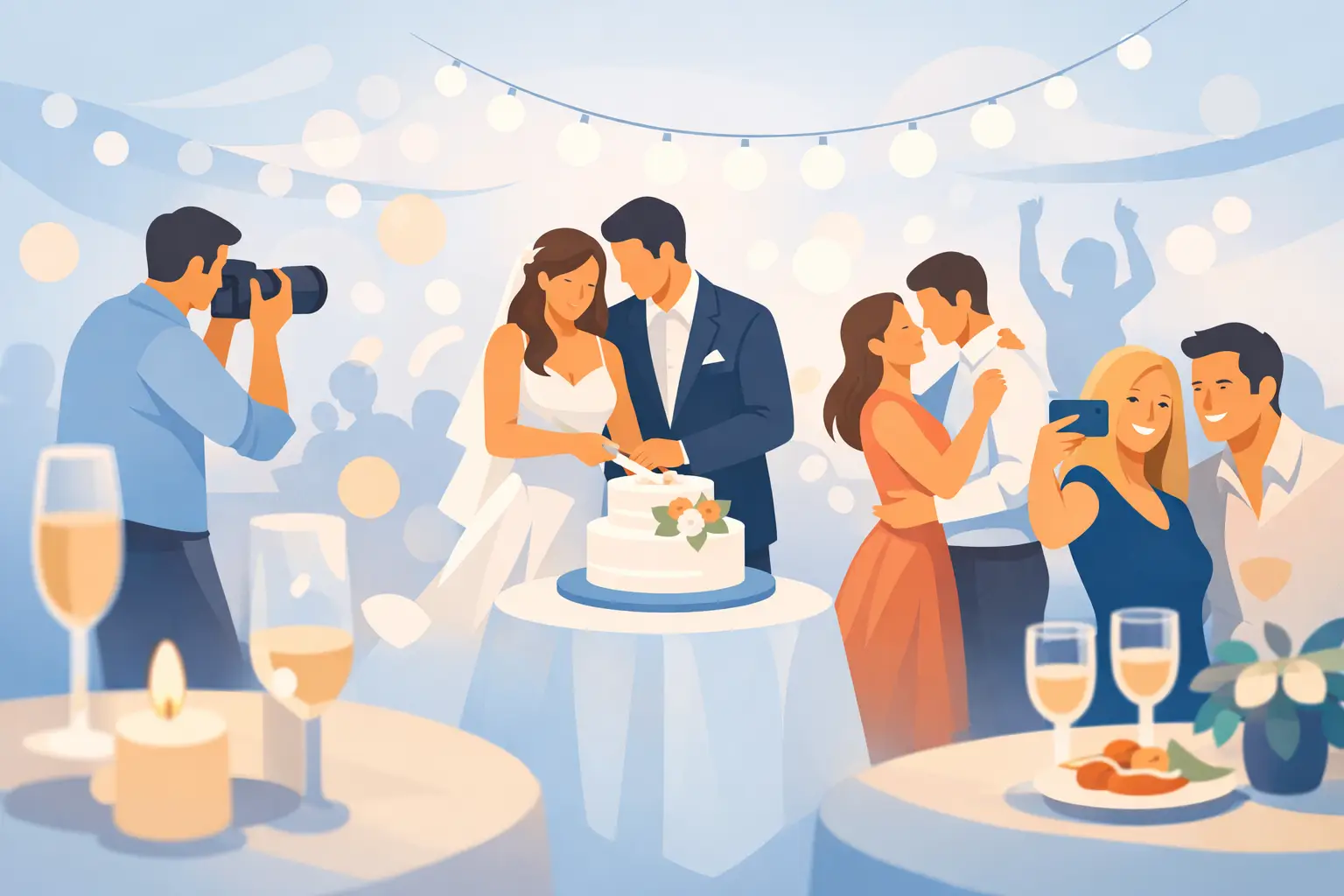
The best reception photos rarely happen because someone simply says, “Smile.” They happen when the room is full of energy, the timing feels right, and guests have a reason to step into the moment. When you plan reception photo moments with intention, your gallery becomes more than a record of the evening. It becomes a collection of the laughs, happy tears, wild dance moves, and small interactions you may have missed while celebrating.
For couples planning a Niagara or Southern Ontario wedding, the goal is not to turn the reception into a production schedule. It is to create a few well-placed opportunities for beautiful, spontaneous photographs while keeping the party moving.
Start With the Moments You Want to Remember
Before building a timeline, think about the feeling you want when you look back at your photos. Maybe you care most about your grandparents watching the first dance. Maybe you want a packed dance floor, a champagne tower surrounded by friends, or candid photos of every table enjoying cocktail hour.
Choose your priorities early, because no reception can give every moment equal attention. A dramatic room entrance may matter deeply to one couple, while another would rather spend that time greeting guests and capturing relaxed portraits. There is no wrong choice, but your photographer, videographer, DJ, planner, and photo booth team need to know which moments deserve space in the evening.
A useful approach is to identify three categories: your must-have formal moments, the candid interactions you want captured, and the guest experiences that will create their own memories. This helps you protect the big highlights without making the whole reception feel overly staged.
Build a Reception Timeline With Breathing Room
A rushed timeline is the fastest way to lose great photo opportunities. If dinner runs late, speeches are squeezed together, or the first dance starts before your photographer is ready, even the most talented team has less room to work their magic.
Allow a little buffer between major events. Five to 10 minutes can make a real difference when guests are moving between rooms, the venue is resetting a space, or your wedding party needs to gather for an entrance. That margin also gives your photography team time to adjust lighting and find the best position without blocking guests’ views.
Make your entrance worth capturing
Your grand entrance is often the first time the full room reacts to you as a newly married couple. Decide whether you want a high-energy entrance with your wedding party, a quiet walk-in together, or a direct transition into your first dance.
If you want the high-energy version, ask your DJ to cue the song before the doors open and encourage your wedding party to set the tone. The bigger the reaction in the room, the more alive the photographs will feel. Keep the route clear and let your photographer know exactly where you will enter, pause, and head next.
Give speeches the right light and the right place
Speeches can produce some of the most meaningful reception images, but they are easy to under-plan. Ask where speakers will stand, whether they will be lit from the front, and where the couple will be seated. A speaker placed under harsh overhead lighting or directly in front of a bright window can create difficult images, even in a beautiful venue.
Also consider the view from your table. If your speakers face you, your photographer can capture your reactions naturally. Those quiet laughs, hand squeezes, and misty eyes often become favourites.
Plan Reception Photo Moments Around Guest Energy
Every part of a reception has a different mood. Work with it rather than expecting guests to be equally enthusiastic all night.
Cocktail hour is ideal for mingling, group photos, and polished booth portraits. Guests are freshly dressed, drinks are flowing, and no one has settled into their seat for dinner yet. If you are taking family photos during this time, consider a photo experience that guests can enjoy without needing you there. A DSLR photo booth or Magic Mirror Photo Booth gives them something fun to do while they wait, plus a print they can take home.
The first hour after dinner can be quieter, especially if speeches are still happening. This is a great time for sentimental moments: a parent dance, an anniversary dance, or a surprise performance. It is less ideal for expecting your wildest dance-floor photos.
Once the dance floor opens, the energy shifts. Plan one or two songs when your photographer can focus on the crowd, rather than only documenting the two of you. A dance-floor huddle, a singalong anthem, or a planned outfit change can give guests a reason to gather and create the joyful, full-room images couples love.
Later in the evening, guests tend to loosen up. This is when a 360 Video Booth can shine, creating playful, shareable clips that feel completely different from traditional wedding photography. The trade-off is that some older family members may head out earlier, so schedule any multi-generational group photos before the late-night party begins.
Create One Dedicated Photo Experience
A reception does not need photo opportunities at every corner. One thoughtfully styled experience can do more than several scattered props or a generic selfie station.
Choose an option that matches the atmosphere you are creating. A Magic Mirror feels elegant and interactive for a formal ballroom or vineyard reception. A Retro Photo Booth can bring a nostalgic, editorial touch to a classic celebration. A 360 Video Booth is made for couples who want movement, glamour, and social-ready content from a high-energy crowd.
Placement matters as much as the booth itself. Set it close enough to the action that guests notice it, but not in a hallway, beside the washrooms, or somewhere that creates a traffic jam. Near the bar or just off the dance floor often works beautifully. Guests can step in naturally throughout the night without missing the celebration.
Custom details make the experience feel like part of the wedding instead of an extra rental. Match the backdrop, print design, and digital frame to your stationery, florals, or colour palette. At Pic Booth, that photography-first approach means the final images can feel polished enough to save, share, and display, not just scroll past the next morning.
Do Not Forget the Candid Moments Between Events
Some of the best reception photos happen when nothing is officially scheduled. A friend fixing your veil, your partner laughing with a cousin, a flower girl falling asleep on a chair, or your parents taking a quiet moment together can hold as much emotional weight as the first dance.
Let your photographer know which people matter most to you beyond the immediate wedding party. If there is a beloved aunt who travelled across the country, a longtime friend group, or a grandparent you especially want photographed, share that before the wedding. Your team cannot recognize every important relationship on sight, but they can watch for them once they know.
You can also create a simple “together photo” window. During dinner or just after speeches, ask your DJ to invite guests to come to your table by group, such as university friends, coworkers, or extended family. Keep it informal and quick. This gives you a relaxed record of the people who showed up for you without turning the night into a long receiving line.
Protect the Look of Your Photos With Lighting
Reception lighting sets the mood, but it also affects every photo. Warm candlelight looks romantic in person, yet a completely dark room can make candid images feel flat or grainy. Ask your venue, DJ, planner, and photography team to coordinate before the day.
For key moments such as entrances, speeches, cake cutting, and dances, avoid turning the room completely black. Soft ambient light, flattering uplighting, and a focused light on the couple can preserve the atmosphere while giving cameras enough to work with. If your venue uses coloured dance-floor lights, ask for a few neutral or warm settings during your most important moments. Intense green or blue light can be fun for the party, but it is not always kind to skin tones.
Make Room for Real Participation
Guests are more likely to join a photo moment when they understand what to do and feel comfortable doing it. A friendly booth attendant, clear signage, a great backdrop, and easy text or email delivery all lower the barrier. People do not need instructions for long. They need an inviting reason to step in.
Think about accessibility, too. Make sure there is enough room for mobility devices, formal dresses, groups, and guests who may not want to stand for long. A great photo experience welcomes the whole room, not only the loudest friends on the dance floor.
The reception will move quickly, and you will not see every wonderful thing as it happens. Give your timeline some breathing room, create a photo experience guests genuinely want to use, and trust your team to watch for the moments unfolding around you. The magic is already in the room. A thoughtful plan simply makes sure you get to keep it.