A gorgeous booth can still flop if the line feels chaotic. Guests drift away, your timeline gets squeezed, and the people who were most excited to jump in suddenly decide they will “go later.” If you’re figuring out how to plan photo booth guest flow, the real goal is simple: keep the booth busy without making it feel crowded, slow, or disconnected from the rest of the celebration.
At weddings and upscale events, guest flow is part logistics and part atmosphere. You want that sweet spot where the booth feels popular, not jammed. That means thinking beyond the booth itself. Placement, timing, signage, booth type, print speed, digital sharing, and even your floor plan all shape how guests move, pause, and participate.
Why photo booth guest flow matters more than people think
When guest flow is planned well, the booth becomes part of the event rhythm. People notice it, use it naturally, and head back to the dance floor or dinner without missing key moments. It feels effortless from the guest side, which is exactly what you want.
When it is not planned, the problems show up fast. A line forms in the wrong place and blocks the bar. Guests in heels or formalwear avoid a cramped corner. A 360 booth draws a crowd, but the setup area is too tight for people waiting. Prints become a bottleneck because no one accounted for how long each group would take. None of this means the booth was a bad choice. It usually means the flow around it was never designed.
This is especially true for premium experiences. A Magic Mirror, 360 Video Booth, Mosaic Photo Wall, or Draw Bots station creates excitement, but each one attracts guests differently. The more interactive the experience, the more important it is to plan how people approach it, use it, and move on.
How to plan photo booth guest flow from the floor plan up
The first decision is where the booth lives. Most hosts focus on what looks good in photos, which matters, but function comes first. A booth placed too far from the action gets ignored until late in the night. A booth placed right in a traffic lane creates a constant bottleneck.
The best placement is usually near the energy, not in the middle of it. Think close to the bar, lounge area, or dance floor edge rather than tucked in a separate room or squeezed beside the DJ. Guests should be able to spot it easily and step over without feeling like they are leaving the party.
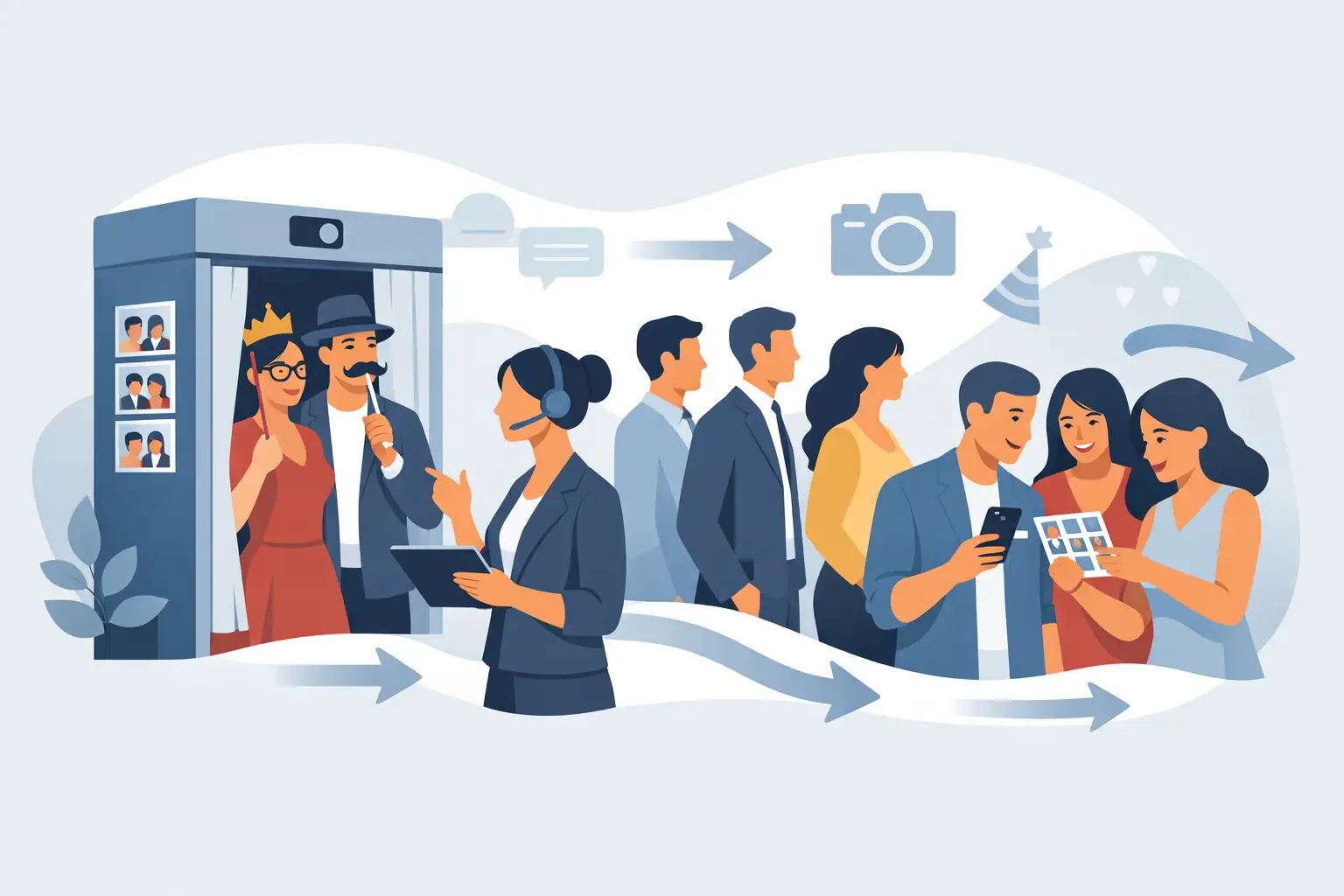
You also need room for three zones: the active booth space, a waiting space, and an exit path. That middle zone gets overlooked all the time. If guests waiting their turn are standing inside the photo area or blocking the prop table, the whole experience starts feeling messy. A little breathing room changes everything.
Ceiling height, lighting, and sound matter too. A 360 setup often needs more open space and benefits from a clear visual presence. A Magic Mirror works beautifully where guests can gather and watch others interact with it. A Retro or DSLR-style booth may fit more easily into tighter layouts, but even then, people still need space to line up without spilling into service routes.
Match the booth style to the way your guests move
Not every event has the same traffic pattern, so the right guest flow depends partly on the booth format you choose.
A traditional photo booth or DSLR booth tends to have the fastest turnover. Small groups step in, pose, get their print or digital delivery, and move along. This makes it a smart fit for larger weddings where you want high participation across the night.
A Magic Mirror creates a more theatrical moment. Guests are drawn in by the interactive screen and often spend a little longer choosing poses and enjoying the experience. That extra engagement is part of the charm, but it does mean you should allow more space around it and avoid placing it where quick through-traffic is essential.
A 360 Video Booth is a bigger visual event. It pulls a crowd, which is great for energy and social sharing, but it naturally has a slower cycle per group. If you want one, build around that reality. It shines when guests have time to watch, cheer, and take turns, not when everyone is trying to squeeze in between speeches and dinner.
For corporate events or large receptions, a Mosaic Photo Wall spreads participation differently. Guests contribute over time, so the flow is less about one steady queue and more about repeat visits across the event. Draw Bots work similarly – they create a keepsake moment, but with a production rhythm that should be factored into the surrounding guest traffic.
Timing can fix a lot of flow problems
One of the smartest ways to improve photo booth guest flow is to think about when guests will actually use it. Peak demand usually hits right after dinner, during cocktail hour, and again later when the dance floor is fully open. If the booth opens at the wrong time, you either get a dead zone or a rush that feels impossible to manage.
For weddings, cocktail hour can work beautifully if the booth is near the reception space and guests are not being pulled in too many directions. During dinner service, usage often drops unless there is a natural lull between courses. Once formalities are done, participation typically jumps.
That is why timing has to work with your run sheet. If speeches, first dance, cake cutting, and late-night food are all clustered together, the booth will compete with too many major moments. Guests will say they want to use it, then keep postponing. A better approach is to create open windows where the booth becomes the obvious next stop.
If you are planning a large guest count, a longer booth run time can be the difference between a packed line and a steady, enjoyable flow. More hours do not just mean more photos. They create breathing room.
Design the line so it feels like part of the party
A line is not always a problem. A dead booth looks lonely. A short, moving line signals fun. The trick is keeping it visible, orderly, and fast enough that people stay in it.
This is where layout details matter. Keep props easy to access without forcing guests to cross paths. Make sure the booth entrance is obvious. If prints are part of the experience, set the collection point so guests grabbing their strip are not blocking the next group. If text or email delivery is offered, that can reduce bunching around the printer and keep things moving.
Hosts sometimes underestimate how much signage helps. Not stiff, corporate-style signage – just clear, attractive prompts that show guests where to stand, what the booth does, and whether prints, digital sharing, or both are included. When people know what to expect, the pace improves immediately.
An attendant also changes the energy. At premium events, this is not just about troubleshooting equipment. It is about welcoming guests in, guiding the line, encouraging shy groups, and keeping the whole experience polished. That human touch makes the booth feel intentional rather than self-serve and random.
Guest flow looks different at 80 people than at 250
The size of your event affects every booth decision. At a smaller wedding, guest flow is often more relaxed. People circle back more than once, and the booth can become a natural social hub. In that case, you may want a format that invites interaction and a location that adds to the room’s atmosphere.
At a larger wedding or gala, efficiency matters more. You want enough throughput that plenty of guests can participate without spending half the night waiting. That might mean choosing a faster booth style, extending service hours, or pairing the main booth with another interactive element elsewhere in the room.
It also depends on your crowd. A dance-heavy guest list will use the booth in bursts. A family-focused wedding might see steady use all evening, especially if grandparents, kids, and friend groups all want their turn. Corporate guests often engage more when the activation is highly visible and easy to understand at a glance.
Small planning choices that make a big difference
If you want the booth to feel effortless on event day, a few details do more work than people expect. Custom print designs and backdrops help guests recognize the booth as part of the event, not an afterthought. Digital delivery keeps the energy current because people can share content right away. Open space around the booth invites participation from guests who might otherwise hesitate.
It also helps to think in layers. The booth itself is one attraction, but nearby seating, décor moments, or a lounge can support guest flow by giving people a reason to linger in the area without clogging the line. For some events, adding a second experience such as an Audio Guest Book or marquee letters spreads attention more evenly across the room.
This is where a consultative planning approach really pays off. The best setup is rarely about picking the flashiest option on its own. It is about matching the experience to your guest count, venue layout, and timeline so the magic actually lands.
If you are wondering how to plan photo booth guest flow, start by picturing your guests, not just the equipment. Where will they notice it, when will they use it, and what might slow them down? When those answers shape the setup, the booth stops feeling like one more vendor corner and starts becoming one of the liveliest, most memorable parts of the night.